Project Arcana
A card battler for the browser, built together in small playable steps. This page is the design home: why the genre grips, the original world and mechanics we would build, and how the art gets made for free.
01 Why this genre hooks
The game that defined the genre in 1993 proved a card battler can hold people for decades. Not because of any one card, but because of a handful of compulsion loops working together. Arcana keeps the loops, not the names.
- Every card is a decision, not an instruction. Cost versus effect, now versus later. A hand of five cards is five small puzzles that interact.
- Hidden information creates tension. You never see the opponent's hand, so every play is partly a bluff and partly a read. Uncertainty is the engine of suspense.
- The deck is the player's fingerprint. Building the deck before the match is half the game - an act of self-expression and theory that no two players share.
- Both players play every turn. Response windows - interrupting, countering, sacrificing at the right moment - mean you never mentally clock out while the opponent moves.
- Comeback math keeps hope alive. Life totals swing, one draw can flip a board. "Just one more turn" is the sound of a game that never feels decided until it is.
- Luck opens the door, skill walks through it. The shuffled deck keeps every match fresh; mulligans, sequencing and resource discipline decide who wins over time.
02 The world: Sunderveil
An original setting, invented for this project. Everything below is ours to keep, rename, or throw away.
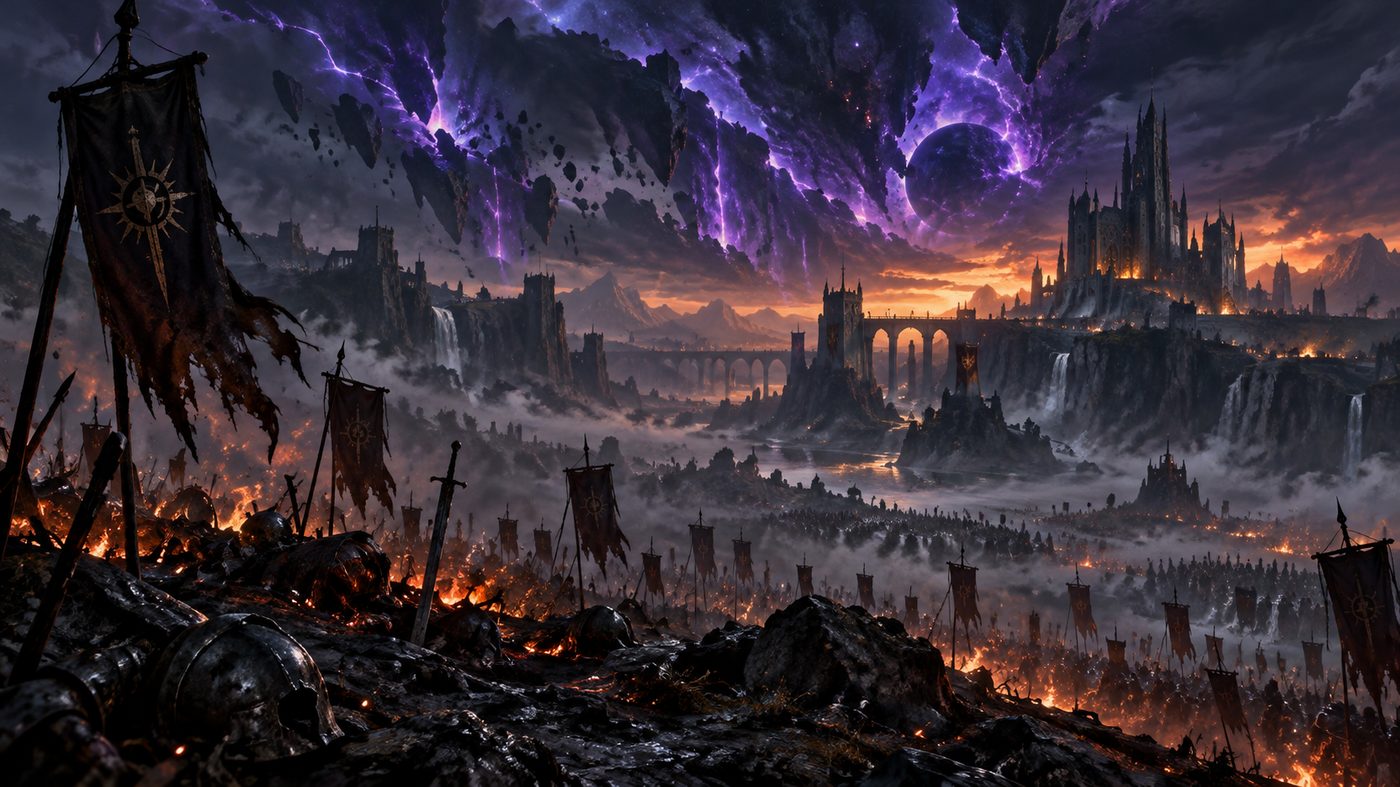
The Veil held for a thousand years. Then it tore. On one side, the Ember Court - wardens and forgelords who bind flame into oath-steel. On the other, the Pale Concord - weavers who pull memory and mist through the breach. Both sides need the tear closed. Neither agrees on who gets to hold the needle. You play a Veilbound: one of the rare few who can channel raw breach-light without burning out, commanding creatures and craft from both sides of the divide.
03 Mechanics direction (original)
A starting point, not a rulebook. Each piece exists to protect one of the compulsion loops above while doing something the genre leader does not.
Resource Attunement - one track, two hungers
Your Attunement rises by one each turn, but it pays for both playing cards and activating the abilities of cards already in play. Every turn is a budget fight between "more board" and "more from my board" - tension the classic lands-and-mana system never asks for.
No dead draws Every card has two faces
Any card can be played face-down as a Shard - a basic resource and blocker - or face-up as itself. The genre's oldest frustration, drawing the wrong mix of resources and spells, is designed out without removing the shuffle's variance.
Battlefield Three Breaches, not one battle line
Creatures hold one of three Breaches between the worlds. Control two of three at the start of your turn and the Veil tears further - your opponent's life total drops before a single creature attacks. Positioning and trading matter more than raw size.
Damage Wounds persist
Damage stays on creatures between turns; healing is a card you chose to pack. Boards carry scars, so every trade has a next-turn consequence.
Winning Break their Veil, or outlast yours
Each player starts with 20 Veil. Lose it to breach control and attacks and you fall - or win the long game by exhausting the opponent's deck while yours remains.
04 Sample cards
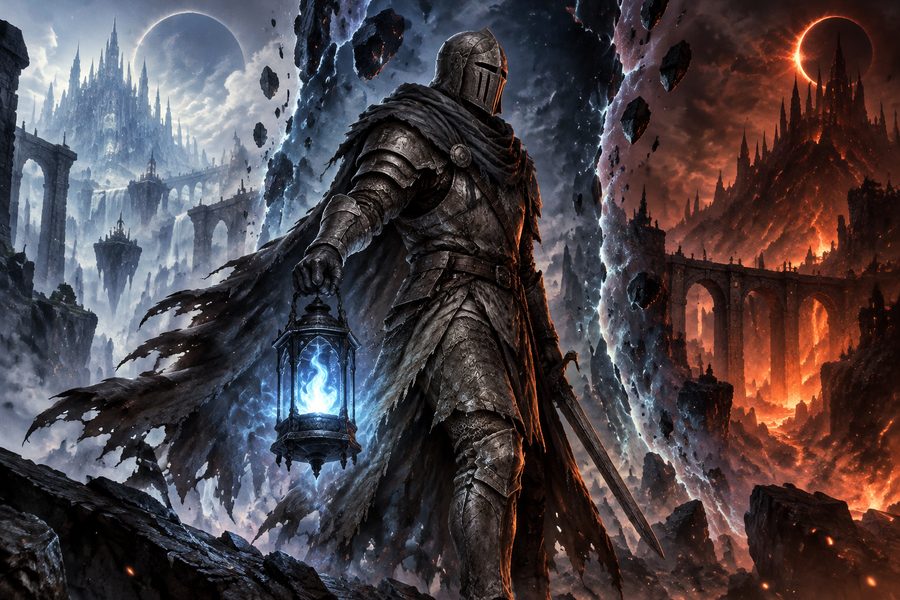
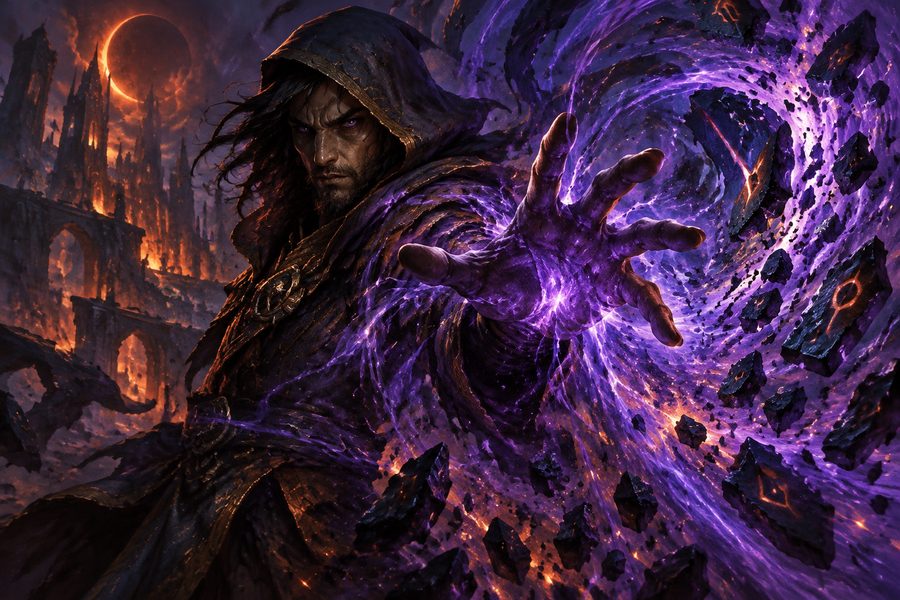
Two originals from the first imagined set, with art generated for this page. Frames are plain CSS, so any future art drops straight in.
05 How we do the art - free
Art is the question that decides whether a card game feels real. The plan, at zero cost and with nothing tied to your personal accounts:
- Generated card art with a locked style recipe. The two pieces above were generated in-session. A fixed style prompt - palette, lighting, brush feel - keeps every future card looking like one set, the way a real game does.
- CSS and SVG for everything structural. Card frames, cost gems, icons and board pieces are vector code: crisp at any size, free forever, and fully ours.
- Free asset libraries as backup. game-icons.net (CC-BY) and Kenney.nl (CC0) cover icons and placeholders if we ever need volume fast; OpenGameArt for prototypes.
- All original, always. Our world, our card names, our text and art. Nothing copied from the genre's established games - so the project can be shared, shown, and someday sold without a rights problem.
06 How it gets built
Plain HTML, CSS and JavaScript - no frameworks, no build step, no cost. Hosted free on Cloudflare Pages, same as the board, so the newest version is always a link.
- Step 1 - first playable: one screen, you versus a simple automated opponent. Draw, play, attack, win or lose. Ugly but real.
- Step 2 - the loop: full Attunement economy, face-down Shards, wounds that persist.
- Step 3 - three Breaches: positioning, control scoring, comeback swings.
- Step 4 - art pass: generated art drops into the frames, sound and motion polish.
- Step 5 - deck building: a collection screen and your first custom deck.
Each step ends with something you can open and play, then steer. Your feedback is the design process.
07 Without Instinct
Arcana is a folder of plain web files - portable by design. Any AI coding tool or text editor can keep iterating on it, and any free static host (Cloudflare Pages, GitHub Pages, Netlify) can serve it. Free image generators and CC0/CC-BY asset libraries cover the art path the same way. What the agent adds is the tight build-play-refine loop, the continuity of the world and rules between sessions, and keeping the hosted version current.